


Feature Article
Clinical Research Resources at BUMC:
Services and Opportunities for Collaboration
By Tom Moore, MD
Associate Provost for Clinical Research
Director, Office of Clinical Research
(With editing assistance from Mark Klempner,
Nancy Kressin, Suzette Levenson, Lou Fiore, Phil Wolf, Raul Garcia, Michael
Christman, and Sue Fish.)


- Office of Clinical Research
- Office of the Associate Provost for Research
- General Clinical Research Center
- Center for Biomedical Imaging
- CHQOER (The Center for Health Quality, Outcomes and Economic Research )
- Data Coordinating Center
- Department of Health Policy & Health Services Research, Boston University Goldman School of Dental Medicine
- Framingham Heart Study
- MAVERIC (Massachusetts Veterans Epidemiology Research and Information Center)
- Microarray Resource Center
This month, we thought we would do something different. Rather than a formal educational article on some clinical research topic, we thought we would provide a list of the many clinical research resources that can be shared by any clinical investigator at BUMC. There are resources to help you find colleagues with similar interests, shared databases (and collaborators to help you use them), a functional MR center, and, of course, the General Clinical Research Center. Many are free services. Some have user fees. The links embedded in the article below will provide more detailed information about each resource. We hope we can point out some resources you weren’t aware of that will be valuable to you.
 Office
of Clinical Research (website):
The Office of Clinical Research (OCR) is a clinical research resource
for the entire Medical Center. Tom Moore, MD, Associate Provost for Clinical
Research is the Director of the OCR. The mission of the OCR is to support
and enhance high-quality, high-value clinical research. It does this particularly
through educational programs. Examples include:
Office
of Clinical Research (website):
The Office of Clinical Research (OCR) is a clinical research resource
for the entire Medical Center. Tom Moore, MD, Associate Provost for Clinical
Research is the Director of the OCR. The mission of the OCR is to support
and enhance high-quality, high-value clinical research. It does this particularly
through educational programs. Examples include:
- The Master of Arts in Clinical Investigation. This master’s degree program provides formal didactic training in the skills of clinical research. Students come from a variety of backgrounds including Baccalaureate degrees, PhDs, and MDs. Dr. Moore is the Director of this degree program.
- Monthly, online Clinical Research Times
- A monthly Clinical Research Seminar. Co-sponsored with our GCRC, the seminar covers a variety of topics of interest and importance to our clinical researchers. The Seminar is particularly popular among research staff and attracts 60-90 attendees each month.
- Responsible Conduct in Research training. The OCR organizes and manages the Responsible Conduct of Research Program that is required for all research trainees who are supported by NIH funds.
 The
OCR also assists investigators find interested industry partners for collaborative
research and has developed a self-reported, searchable database for BUMC
clinical investigators and their research interests (BUMC
Clinical Investigator Search). (No charge for services.)
The
OCR also assists investigators find interested industry partners for collaborative
research and has developed a self-reported, searchable database for BUMC
clinical investigators and their research interests (BUMC
Clinical Investigator Search). (No charge for services.)
 Office of the Associate Provost for Research
(website)
(638-7654): Mark Klempner, MD, Associate Provost for Research, directs
this office which stimulates multidisciplinary research among investigators
in the Departments and Schools at the Medical Campus, at Boston Medical
Center, and with investigators in allied fields at Boston University’s
Charles River Campus, e.g. the Schools of Engineering, Arts and Sciences
(Biology, Chemistry, Physics), Social Work, Sargent College, The Photonics
Center, etc. This office also promotes the development of new shared resources
that are needed for cutting edge biomedical research and provides administrative
support for multidisciplinary research applications for research funding.
The Office assists
Office of the Associate Provost for Research
(website)
(638-7654): Mark Klempner, MD, Associate Provost for Research, directs
this office which stimulates multidisciplinary research among investigators
in the Departments and Schools at the Medical Campus, at Boston Medical
Center, and with investigators in allied fields at Boston University’s
Charles River Campus, e.g. the Schools of Engineering, Arts and Sciences
(Biology, Chemistry, Physics), Social Work, Sargent College, The Photonics
Center, etc. This office also promotes the development of new shared resources
that are needed for cutting edge biomedical research and provides administrative
support for multidisciplinary research applications for research funding.
The Office assists  faculty
with research strategic planning and assessment of institutional capabilities
and has developed a Research Resources web-based database to identify
researcher interest, expertise, and catalog of currently funded projects.
(Research
Resources for the BU-BMC Community). (No charge for services.)
faculty
with research strategic planning and assessment of institutional capabilities
and has developed a Research Resources web-based database to identify
researcher interest, expertise, and catalog of currently funded projects.
(Research
Resources for the BU-BMC Community). (No charge for services.)
 General
Clinical Research Center (website):
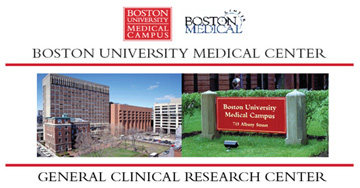
The GCRC is a key clinical research resource at Boston University Medical
Center (BUMC). It is located at the center of the medical campus (Evans
7). The overall goal of the GCRC is to provide a setting for patient-oriented,
clinical investigation by faculty members of the Boston University School
of Medicine, in particular those funded by NIH grants. The GCRC provides
inpatient and outpatient facilities, a core laboratory to carry out non-routine
sophisticated assays, a specialized equipment laboratory, and biostatistical
and data management resources. Funds are available to purchase additional
equipment for shared utilization (examples of such on the unit include
an echocardiography machine and a state of the art bone densitometer).
Michael F. Holick, MD, PhD is the Program Director of the GCRC. Additionally,
our Center has a dedicated Dental Unit, directed by Thomas Van Dyke, DDS,
PhD.
General
Clinical Research Center (website):
The GCRC is a key clinical research resource at Boston University Medical
Center (BUMC). It is located at the center of the medical campus (Evans
7). The overall goal of the GCRC is to provide a setting for patient-oriented,
clinical investigation by faculty members of the Boston University School
of Medicine, in particular those funded by NIH grants. The GCRC provides
inpatient and outpatient facilities, a core laboratory to carry out non-routine
sophisticated assays, a specialized equipment laboratory, and biostatistical
and data management resources. Funds are available to purchase additional
equipment for shared utilization (examples of such on the unit include
an echocardiography machine and a state of the art bone densitometer).
Michael F. Holick, MD, PhD is the Program Director of the GCRC. Additionally,
our Center has a dedicated Dental Unit, directed by Thomas Van Dyke, DDS,
PhD.
The BU GCRC also plays an important role in the training of new clinical investigators on campus. Peter Merkel, MD directs the GCRC Clinical Investigator Development Program (CIDP). This program identifies clinical research trainees, links them with mentors, and provides “hands-on” training in research methodology and completion of a research project. Different components of the CIDP include the Summer Medical Student Research Program and programs targeting research fellows. (No charge for services. Supported by an NIH grant.)
 Center
for Biomedical Imaging (website):
This Center (opened in March, 2004) provides imaging capabilities specifically
for Boston University investigators. Its Philips 3 Tesla Intera MRI scanner
provides 6 independent channels for parallel imaging capabilities (so
called SENSE imaging). It offers access to all levels of pulse sequence
and hardware development from Philips. Capabilities of the 3T systems
include all rapid imaging techniques in multiple contrast (weighting)
options; dynamic studies (fMRI) using both spin-echo, gradient echo, and
CBF- enhancing techniques; connectivity, for the detailed reconstruction
of white-matter fibers and the diagnostics of white-matter disease; and
spectroscopy with 2D and 3D chemical shift imaging for large volume studies.
The Center Director, Dae-Shik Kim, PhD, and a center technician provide
assistance and interpretation support. The Center was funded with institutional
funds. Funded investigators are charged an hourly rate for magnet time,
but 25% of magnet time is protected for unfunded research. Tom Moore,
MD is the Chairman of the Center’s Oversight Committee. (Hourly fee for
magnet time, although some time is available for unfunded, pilot studies.)
Center
for Biomedical Imaging (website):
This Center (opened in March, 2004) provides imaging capabilities specifically
for Boston University investigators. Its Philips 3 Tesla Intera MRI scanner
provides 6 independent channels for parallel imaging capabilities (so
called SENSE imaging). It offers access to all levels of pulse sequence
and hardware development from Philips. Capabilities of the 3T systems
include all rapid imaging techniques in multiple contrast (weighting)
options; dynamic studies (fMRI) using both spin-echo, gradient echo, and
CBF- enhancing techniques; connectivity, for the detailed reconstruction
of white-matter fibers and the diagnostics of white-matter disease; and
spectroscopy with 2D and 3D chemical shift imaging for large volume studies.
The Center Director, Dae-Shik Kim, PhD, and a center technician provide
assistance and interpretation support. The Center was funded with institutional
funds. Funded investigators are charged an hourly rate for magnet time,
but 25% of magnet time is protected for unfunded research. Tom Moore,
MD is the Chairman of the Center’s Oversight Committee. (Hourly fee for
magnet time, although some time is available for unfunded, pilot studies.)
 CHQOER
(The Center for Health Quality, Outcomes and Economic Research )
(website):
This Department of Veterans Affairs Health Services Research & Development
Center of Excellence has linked its structure, operations and research
themes with the Health Services Department at the Boston University School
of Public Health. Dan Berlowitz, MD, MPH is the Center’s Director. The
Center’s research concentrates on four domains: health quality assessment,
outcomes measurement, health economics, and health statistics. Across
these domains, researchers develop innovative methodologies and models
of care to provide the most effective, efficient and appropriate care
to our nation’s veterans. As selected examples of the research done at
CHQOER, Dan Berlowitz’s analyses evaluating the quality of ambulatory
care continue, including projects on validating a measure of hypertension
care using administrative databases and developing a quality measure for
glycemic control. Jack Clark, PhD studies outcomes of prostate cancer.
Susan Eisen, PhD assesses the quality and outcomes of mental health care,
including revising and validating the Behavior and Symptom Identification
Scale (BASIS-32). The activities of Nancy Kressin, PhD focus on understanding
reasons for disparities in care for dental, hypertension, and cardiac
care. This Center is happy to share its expertise and its resources in
collaborative research.
CHQOER
(The Center for Health Quality, Outcomes and Economic Research )
(website):
This Department of Veterans Affairs Health Services Research & Development
Center of Excellence has linked its structure, operations and research
themes with the Health Services Department at the Boston University School
of Public Health. Dan Berlowitz, MD, MPH is the Center’s Director. The
Center’s research concentrates on four domains: health quality assessment,
outcomes measurement, health economics, and health statistics. Across
these domains, researchers develop innovative methodologies and models
of care to provide the most effective, efficient and appropriate care
to our nation’s veterans. As selected examples of the research done at
CHQOER, Dan Berlowitz’s analyses evaluating the quality of ambulatory
care continue, including projects on validating a measure of hypertension
care using administrative databases and developing a quality measure for
glycemic control. Jack Clark, PhD studies outcomes of prostate cancer.
Susan Eisen, PhD assesses the quality and outcomes of mental health care,
including revising and validating the Behavior and Symptom Identification
Scale (BASIS-32). The activities of Nancy Kressin, PhD focus on understanding
reasons for disparities in care for dental, hypertension, and cardiac
care. This Center is happy to share its expertise and its resources in
collaborative research.
 Data
Coordinating Center (website):
The DCC has been a data management resource center for the Boston University
Medical Center community since 1984. Directed by Suzette Levenson, MPH,
the 35 member staff of the DCC consists of statistical and database programmers,
web developers, and data managers with expertise in study design, implementation
of study protocols, development of computerized and web-based data collection
and tracking systems, quality control procedures, and statistical analyses.
Data
Coordinating Center (website):
The DCC has been a data management resource center for the Boston University
Medical Center community since 1984. Directed by Suzette Levenson, MPH,
the 35 member staff of the DCC consists of statistical and database programmers,
web developers, and data managers with expertise in study design, implementation
of study protocols, development of computerized and web-based data collection
and tracking systems, quality control procedures, and statistical analyses.
The DCC has experience providing leadership and organization for large multi-center clinical research projects. Responsibilities routinely include: design and creation of case report forms (CRFs) and data dictionaries, subject and data tracking systems, training site personnel in data management and quality control procedures, site monitoring/auditing procedures, creation of coding manuals and Manuals of Operation, project web site design and management, design and implementation of a wide variety of data entry systems with built-in range and verification capabilities, statistical analyses, and study closeout. The DCC also has experience working with Data Safety Monitoring Boards. Responsibilities have been to provide the DSMB with descriptive material to review as well as timely interim analyses and reports that monitor any adverse events. When planning to submit a grant, investigators can contact Ms. Levenson who will assist in writing the data management plan as well as developing an appropriate budget to cover the data management activities for the project.
 Department
of Health Policy & Health Services Research, Boston University Goldman
School of Dental Medicine (website):
The Department of Health Policy & Health Services Research, at Boston
University Goldman School of Dental Medicine, and its NIH-funded oral
health disparities research center (http://www.creedd.org),
serve as resources for oral health research and training for trainees
throughout the Boston University Medical Center. Its Chair is Raul Garcia,
DMD, MMS. The Department's organizing principle is that its research efforts
must serve to inform health policy, health promotion, and clinical care,
with the aim of improving oral health outcomes. Dr. Garcia and his colleagues
in the Department have expertise over a wide range of research areas,
including current research projects on: access and utilization of dental
care; oral health-related quality of life; epidemiology of periodontal
disease, caries, and fluorosis; role of systemic diseases in oral health;
role of nutritional factors in periodontal disease and tooth loss; effects
of tobacco on oral disease outcomes; community surveillance and intervention
studies to measure and reduce oral health disparities in children, elders
and other vulnerable population groups. Staff have special expertise in
the analysis of longitudinal data as well as the use of large epidemiologic
and administrative databases for the study of oral health outcomes, including
the VA Dental Longitudinal Study, the largest and longest-running study
in the U.S. of oral health in aging. This Department is happy to share
its expertise and its resources in collaborative research.
Department
of Health Policy & Health Services Research, Boston University Goldman
School of Dental Medicine (website):
The Department of Health Policy & Health Services Research, at Boston
University Goldman School of Dental Medicine, and its NIH-funded oral
health disparities research center (http://www.creedd.org),
serve as resources for oral health research and training for trainees
throughout the Boston University Medical Center. Its Chair is Raul Garcia,
DMD, MMS. The Department's organizing principle is that its research efforts
must serve to inform health policy, health promotion, and clinical care,
with the aim of improving oral health outcomes. Dr. Garcia and his colleagues
in the Department have expertise over a wide range of research areas,
including current research projects on: access and utilization of dental
care; oral health-related quality of life; epidemiology of periodontal
disease, caries, and fluorosis; role of systemic diseases in oral health;
role of nutritional factors in periodontal disease and tooth loss; effects
of tobacco on oral disease outcomes; community surveillance and intervention
studies to measure and reduce oral health disparities in children, elders
and other vulnerable population groups. Staff have special expertise in
the analysis of longitudinal data as well as the use of large epidemiologic
and administrative databases for the study of oral health outcomes, including
the VA Dental Longitudinal Study, the largest and longest-running study
in the U.S. of oral health in aging. This Department is happy to share
its expertise and its resources in collaborative research.
 Framingham
Heart Study (website):
The Framingham Heart Study, now in its 56th year of continuous operation,
is one of the premier epidemiological studies of cardiovascular disease.
Much of the decline in the incidence of heart disease in the past half
century can be ascribed to knowledge of risk factors acquired in the Framingham
Study. In fact, the term “risk factors” was coined by William B. Kannel,
M.D. one of the original Directors of the Study and emeritus Professor
of Medicine at Boston University School of Medicine. The Framingham Heart
Study was begun in 1948 under the direction of the NHLBI. The objective
of the Framingham Heart Study was to identify the common factors or characteristics
that contribute to CVD by following its development over a long period
of time in a large group of participants who had not yet developed overt
symptoms of CVD or suffered a heart attack or stroke. There were 5,209
men and women in the original cohort (1948) and 5,124 of the original
participants' adult children and their spouses were recruited in 1971.
The Study is now enrolling third-generation subjects. Since 1971, the
Framingham Heart Study has been conducted in collaboration with Boston
University.
Framingham
Heart Study (website):
The Framingham Heart Study, now in its 56th year of continuous operation,
is one of the premier epidemiological studies of cardiovascular disease.
Much of the decline in the incidence of heart disease in the past half
century can be ascribed to knowledge of risk factors acquired in the Framingham
Study. In fact, the term “risk factors” was coined by William B. Kannel,
M.D. one of the original Directors of the Study and emeritus Professor
of Medicine at Boston University School of Medicine. The Framingham Heart
Study was begun in 1948 under the direction of the NHLBI. The objective
of the Framingham Heart Study was to identify the common factors or characteristics
that contribute to CVD by following its development over a long period
of time in a large group of participants who had not yet developed overt
symptoms of CVD or suffered a heart attack or stroke. There were 5,209
men and women in the original cohort (1948) and 5,124 of the original
participants' adult children and their spouses were recruited in 1971.
The Study is now enrolling third-generation subjects. Since 1971, the
Framingham Heart Study has been conducted in collaboration with Boston
University.
Dr. Philip Wolf, Professor of Neurology and Research Professor of Medicine at Boston University School of Medicine is principal investigator of this contract. There are tremendous opportunities to develop projects utilizing Framingham Heart Study data, including genetic data and samples. In addition to studies of cardiovascular disease and stroke, the Framingham Heart Study is also the setting for epidemiological studies of osteoarthritis, osteoporosis, Alzheimer’s disease, pulmonary disease, sleep disorders, visual impairment, hearing loss and others. You can learn more about accessing data from the Heart Study by visiting its NHLBI web site or by contacting Phil Wolf.
 MAVERIC
(Massachusetts Veterans Epidemiology Research and Information Center)
(website):
The MAVERIC supports longitudinal, epidemiologic cohort studies of veterans
with the variety of disorders, and it offers opportunities for development
of new research projects. MAVERIC, located at the Jamaica Plain campus
of the VA Boston Healthcare System, is co- directed by Lou Fiore, MD,
MPH and J. Michael Gaziano, MD, MPH. MAVERIC staff have expertise in handling
national as well as regional administrative and medical care VA and Medicare
datasets. MAVERIC’s mission is to be a national resource to foster epidemiologic
research in the VA with a community of ad hoc consultants and faculty
with expertise in all disciplines of epidemiology; the necessary infrastructure
to support a highly relevant epidemiologic research agenda including a
core computing facility and core laboratory for blood specimen processing
and storage; a clearinghouse for VA and non-VA databases and the expertise
to harvest them for epidemiologic research projects and pilot studies;
a training center to educate both young and established VA investigators
in epidemiologic research methods; and an information dissemination center
for transfer of relevant epidemiological information to VA health care
providers and administrators system wide. A thriving program in pharmacoepidemiology
takes advantage of the availability of VA pharmacy files for all 4.2 million
veteran subscribers, merging these files with laboratory files and ICD-9/PCT
files.
MAVERIC
(Massachusetts Veterans Epidemiology Research and Information Center)
(website):
The MAVERIC supports longitudinal, epidemiologic cohort studies of veterans
with the variety of disorders, and it offers opportunities for development
of new research projects. MAVERIC, located at the Jamaica Plain campus
of the VA Boston Healthcare System, is co- directed by Lou Fiore, MD,
MPH and J. Michael Gaziano, MD, MPH. MAVERIC staff have expertise in handling
national as well as regional administrative and medical care VA and Medicare
datasets. MAVERIC’s mission is to be a national resource to foster epidemiologic
research in the VA with a community of ad hoc consultants and faculty
with expertise in all disciplines of epidemiology; the necessary infrastructure
to support a highly relevant epidemiologic research agenda including a
core computing facility and core laboratory for blood specimen processing
and storage; a clearinghouse for VA and non-VA databases and the expertise
to harvest them for epidemiologic research projects and pilot studies;
a training center to educate both young and established VA investigators
in epidemiologic research methods; and an information dissemination center
for transfer of relevant epidemiological information to VA health care
providers and administrators system wide. A thriving program in pharmacoepidemiology
takes advantage of the availability of VA pharmacy files for all 4.2 million
veteran subscribers, merging these files with laboratory files and ICD-9/PCT
files.
The Clinical Trial Coordinating Center at MAVERIC is a core resource for the VA Cooperative Studies Program. Existing toolsets for the conduct of clinical trials include a 21 CFR 11 technically compliant web-based electronic data capture system built in .NET framework using SQL Server and CDISC XML data standards. This system satisfies the upcoming FDA submitting standards for e-trials. For clinical trial management MAVERIC has developed collaboration and document management tools using web services from Microsoft (SharePoint Server). Expertise in all aspects of large and small scale trial design, implementation management, IT regulatory compliance (including systems validation) are in place and are available for competitive fees or for collaboration on grant applications.
 Microarray
Resource Center (website):
The goal of the Microarray Resource Center (based in the Department of
Genetics and Genomics) is to help both clinical and basic researchers
at B.U. apply the power of genome-wide experimentation to their research
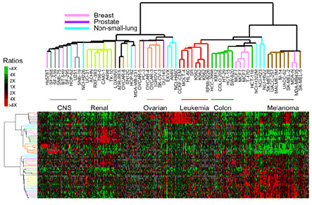
projects through the use of microarray technology. Microarrays make it
possible to perform standard molecular assays such as genotyping, measuring
gene expression, DNA resequencing, analysis of chromatin immunoprecipitations,
and analysis of alternative RNA splicing simultaneously across the entire
genome of any organism. The Resource uses both commercial arrays from
Affymetrix that can contain up to five million distinct DNA sequences
arrayed in an area about the size of a nickel, as well as custom oligonucleotide
arrays spotted onto glass slides that are manufactured at the Microarray
Resource. Over the last year, the Microarray Resource has analyzed about
four thousand microarrays for about sixty different research groups at
BU and elsewhere. The resource has received enthusiastic support for its
rigorous quality control process, ability to consistently produce high
quality data, and the detailed help they provide with experimental design,
data analysis and bioinformatics. For gene expression studies, users of
the Resource only need to provide the Resource with a small sample of
total RNA and the Resource handles the rest. (Charges fees for services.)
Microarray
Resource Center (website):
The goal of the Microarray Resource Center (based in the Department of
Genetics and Genomics) is to help both clinical and basic researchers
at B.U. apply the power of genome-wide experimentation to their research
projects through the use of microarray technology. Microarrays make it
possible to perform standard molecular assays such as genotyping, measuring
gene expression, DNA resequencing, analysis of chromatin immunoprecipitations,
and analysis of alternative RNA splicing simultaneously across the entire
genome of any organism. The Resource uses both commercial arrays from
Affymetrix that can contain up to five million distinct DNA sequences
arrayed in an area about the size of a nickel, as well as custom oligonucleotide
arrays spotted onto glass slides that are manufactured at the Microarray
Resource. Over the last year, the Microarray Resource has analyzed about
four thousand microarrays for about sixty different research groups at
BU and elsewhere. The resource has received enthusiastic support for its
rigorous quality control process, ability to consistently produce high
quality data, and the detailed help they provide with experimental design,
data analysis and bioinformatics. For gene expression studies, users of
the Resource only need to provide the Resource with a small sample of
total RNA and the Resource handles the rest. (Charges fees for services.)
 If
we have omitted a research resource that you are associated with, please
forgive us. Let us know about this resource so that we can include it
in our next listing. Please send an email to crtimes@bu.edu.
If
we have omitted a research resource that you are associated with, please
forgive us. Let us know about this resource so that we can include it
in our next listing. Please send an email to crtimes@bu.edu.
The Clinical Research Times is not published in July and August, so have an enjoyable summer. See you in September, with the return of the Clinical Research Times, complete with quizzes.
Many thanks to Jon Korn for graphics.