


Feature Article
A Statistician Reflects on Fraud
in Clinical Research
June 2007 Issue
By Ted Colton, PhD
Author has nothing to disclose with regards
to commercial support.
- Introduction
- Three Major Motives for Committing Fraud in Clinical Trials
- Three Frequent Fraudulent Practices in Clinical Trials
- Questions for Consideration
- Case study #1: Mr. Paul H. Kornak
- Case study #2: Dr. Marc Strauss
- Conclusions
- Quiz
 Fraud
in medical research has a long and well-documented history. Among the
classic episodes of fraud in contemporary research are: Gregor Mendel’s
data on characteristics of garden peas (where the data, as analyzed by
the eminent statistician Sir Ronald Fisher, were found to fit Mendel’s
hypotheses too well, such that the data must have been altered or selectively
manipulated to conform to Mendel’s expectations); Sir Cyril Burt’s
data on IQ’s of identical twins reared apart and reared together
(where in three successive studies of such twins with increasing numbers
of twin pairs, the correlation coefficients were identical to three decimal
points - a virtual statistical impossibility); and the whistle-blowing
of Dr. John Darsee’s peers at Harvard Medical School (where his
colleagues caught him red-handed falsifying data in a laboratory experiment
which led to an investigation that revealed virtually Darsee’s entire
research career had been based on data falsification).
Fraud
in medical research has a long and well-documented history. Among the
classic episodes of fraud in contemporary research are: Gregor Mendel’s
data on characteristics of garden peas (where the data, as analyzed by
the eminent statistician Sir Ronald Fisher, were found to fit Mendel’s
hypotheses too well, such that the data must have been altered or selectively
manipulated to conform to Mendel’s expectations); Sir Cyril Burt’s
data on IQ’s of identical twins reared apart and reared together
(where in three successive studies of such twins with increasing numbers
of twin pairs, the correlation coefficients were identical to three decimal
points - a virtual statistical impossibility); and the whistle-blowing
of Dr. John Darsee’s peers at Harvard Medical School (where his
colleagues caught him red-handed falsifying data in a laboratory experiment
which led to an investigation that revealed virtually Darsee’s entire
research career had been based on data falsification).
In recent years, several cases of fraud in clinical research have attracted the interest of the lay press. In this article, I give brief reports about two such cases. But, before I delve into the two case studies, I want to make some didactic comments about fraud in clinical trials.
Three Major Motives for Committing Fraud in Clinical Trials
- Monetary gain, enhancement of prestige. Many trials pay investigators per subject recruited. In addition, there are perks and rewards for meeting and/or surpassing recruitment goals in trials. The more subjects recruited, the higher the monetary gains and the investigator’s prestige among his peers.
- Compensate for laziness, sloppiness in data collection. Investigators and their staff are loathe to report that they had forgotten to obtain a particular observation or to have not pursued the subject’s delinquency in making a clinic visit and will, therefore, fabricate such data.
- Include subjects who would otherwise be excluded. Sometimes the inclusion of patients who should be excluded from the trial can have a noble motive. A clinical investigator may feel that it is in his/her patient’s best interest in regard to medical care to be included in a trial, rather than to exclude that patient because of an exclusion criterion in the protocol that the investigator knows has little or no clinical meaning for the patient’s prognosis.
Three Frequent Fraudulent Practices in Clinical Trials
- Fabricating missing measurements. Investigators
may compensate for missing data due to a missed visit.
 One manipulation is to interpolate the data from the previous visit
and the subsequent visit, or to use the data from the previous visit;
i.e. last observation carried forward. These are legitimate methods
for handling missing data if the data analyst who uses them reports
them as such. It is not legitimate if an investigator
does the seemingly identical thing and the interpolated or carried forward
data are allowed to appear as actual data. These are then fabricated
data, and fraud has been committed. This is one of the most common types
of fraud in contemporary research, particularly clinical trials.
One manipulation is to interpolate the data from the previous visit
and the subsequent visit, or to use the data from the previous visit;
i.e. last observation carried forward. These are legitimate methods
for handling missing data if the data analyst who uses them reports
them as such. It is not legitimate if an investigator
does the seemingly identical thing and the interpolated or carried forward
data are allowed to appear as actual data. These are then fabricated
data, and fraud has been committed. This is one of the most common types
of fraud in contemporary research, particularly clinical trials. - Falsifying eligibility. Investigators may include subjects who do not quite meet the inclusion criteria in order to meet recruitment requirements.
- Not reporting adverse events. The tendency is to under-report adverse events. Reporting the occurrence of an adverse event requires additional time and effort in completing what may be a variety of forms. Investigators and study staff may believe that it is much easier not to report such events and save the effort.
I would like to offer some questions to stimulate your reflection as you read the two case studies.
- How was the fraud detected?
-
Currently, there are two major means: 1) whistle-blowers; 2) routine
audits with data validation.
- Why was fraud committed?
-
Which, if any, of the three major motives led to the commission of
fraud?
- What have been the consequences of the fraud?
-
In some instances, the main hypothesis is basically unaffected; but
in some instances, subjects may have been hurt. The reputations of
other researchers have also been tainted, and the credibility of institutions
has been damaged. Furthermore, media coverage of episodes of fraud
tarnishes the public's view and confidence in the conduct of medical
research.
- Can we use statistical methods to detect or confirm suspected
instances of fraud?

-
There is an armamentarium of statistical methodology that one can
deploy in arousing suspicion of fraudulent data. Are statistical methods
alone sufficient to detect and confirm fraudulent data?
- Statistically, how can/should the results be handled when some
data are suspected or confirmed fraudulent?
-
Once fraud has been confirmed, what does one do with the data from
the trial? Throw all the data out and start the study anew? Throw
out only the data from the site where fraud has been confirmed? Throw
out only the data confirmed as fraudulent and keep all remaining data
from the site where fraud was confirmed?
- What measures, if any, can we take to prevent future episodes
of fraud?
-
Is it possible to prevent or to reduce the incidence of fraud in future
medical research?
Case study #1: Mr. Paul H. Kornak
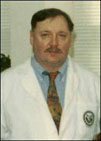 Paul
Kornak was hired by the VA Medical Center in Albany, NY in 2000 as a research
coordinator. He was the Albany site coordinator for several cancer studies
as well as for the FeAST study (Iron [Fe] and Atherosclerosis Study).
FeAST was a complex two-armed clinical trial organized within the VA Cooperative
Studies Program, a program of multi-center clinical trials within the
VA system.
Paul
Kornak was hired by the VA Medical Center in Albany, NY in 2000 as a research
coordinator. He was the Albany site coordinator for several cancer studies
as well as for the FeAST study (Iron [Fe] and Atherosclerosis Study).
FeAST was a complex two-armed clinical trial organized within the VA Cooperative
Studies Program, a program of multi-center clinical trials within the
VA system.
I was on the Data Monitoring Committee (DMC) for the FeAST trial. At one of our annual DMC meetings, we were told that there were some irregularities with the data coming from the Albany site. Someone remarked that this was a shame since Albany was one of the best recruiters in this complex, difficult-to-recruit-and-to-enroll trial.
At a subsequent DMC meeting, we were told that the Inspector General of the VA was at Albany and had impounded all the FeAST trial data at Albany. The Office of Research Integrity (ORI) was also in Albany investigating the alleged fraud.
At the Albany VA, Mr. Kornak was the site coordinator for several cancer studies. Under his direction, patients who were ineligible because of medical conditions were nevertheless given research drugs. Two pharmacists blew the whistle and their reports were eventually accepted. His fraud was detected as a result of audits and validity checks conducted by a pharmaceutical company for the cancer trials for which Mr. Kornak had responsibility. The ORI report states, “He would and repeatedly did submit false documentation regarding patients and study subjects and enroll and cause to be enrolled persons as study subjects who did not qualify under the particular study protocol.” In fact, his indictment goes further and indicates that in one of the cancer studies, he caused the death of a patient whose documents he falsified so that the patient would become eligible for the trial. Mr. Kornak’s data falsifications included the FeAST study as well as the cancer studies.
Mr. Kornak pleaded guilty to three of the criminal charges levied against him, including data falsification and criminally negligent homicide for the one patient in the cancer trial who died as a result of his fraud.
What happened to the Albany data in FeAST, some of which were perfectly
good data? I had some e-mail correspondence a few weeks ago with the statistician
for FeAST, Dr. Bruce Chow in Palo Alto. Bruce told me that they never
were allowed to use any of the data from Albany.
Case study #2: Dr. Marc Strauss
 One
cannot make a presentation at BU on fraud without exhuming BU’s
own skeleton-in-the-closet: the Marc Strauss incident. Marc Strauss was
an oncologist with special interest in lung cancer. He came to BUMC from
NIH in 1974. His success at BUMC was impressive, and he accumulated a
superlative track record of funding for his research efforts and had produced
a most impressive array of publications. In 1977, the Boston Junior Chamber
of Commerce named him as one of the "Ten Outstanding Young Leaders
of Greater Boston".
One
cannot make a presentation at BU on fraud without exhuming BU’s
own skeleton-in-the-closet: the Marc Strauss incident. Marc Strauss was
an oncologist with special interest in lung cancer. He came to BUMC from
NIH in 1974. His success at BUMC was impressive, and he accumulated a
superlative track record of funding for his research efforts and had produced
a most impressive array of publications. In 1977, the Boston Junior Chamber
of Commerce named him as one of the "Ten Outstanding Young Leaders
of Greater Boston".
One of Dr. Strauss’ funded projects was with ECOG (Eastern Cooperative
Oncology Group) where he led the BUMC effort in that program. Marc Strauss
committed fraud by directing his staff, nurses and fellows to falsify
data. One narrative states, “The falsifications ranged from [merely]
changing a patient’s birth date [to make a patient eligible,] to
reporting treatments and  laboratory
[tests] that were never done and [even] inventing the existence of a tumor
in one patient.” The staff was sufficiently concerned that they
blew the whistle on Strauss and told the Chief of Medicine, Dr. Norman
Levinsky, about the fraud that Dr. Strauss had ordered them to commit.
laboratory
[tests] that were never done and [even] inventing the existence of a tumor
in one patient.” The staff was sufficiently concerned that they
blew the whistle on Strauss and told the Chief of Medicine, Dr. Norman
Levinsky, about the fraud that Dr. Strauss had ordered them to commit.
BU undertook an investigation, and it was later found that about 15% of
the ECOG data had been falsified. It was clear from the investigation
that fraud had been committed, both data falsification and data fabrication,
but Dr. Strauss never admitted that he perpetrated the fraud. Dr. Strauss
was forced to resign.
I asked my colleague, Dr. Marianne Prout, an oncologist who was here
at BUMC at that time, what ECOG did with regard to the BU data, some of
which had been falsified. She told me that, despite the fact that 85%
of the data were valid, ECOG discarded all the data submitted by BUMC.
She added that ECOG also threw out BU and all its investigators from further
participation in the ECOG network.
The allegation of fraud is always a serious charge and is not to be taken lightly. One is hesitant even to reveal allegations of fraud until there is more definitive proof. Protection for the whistle-blowers is necessary as well as for the alleged perpetrator. Hence, many of these episodes of fraud are years in the making, from initial suspicions to confirmation and public revelation of the episode.
I would like to add some comments from my perspective as a statistician, data analyst and occasional fraud-buster. Missing data and outliers are very real. If researchers understand this, then they might be less tempted to compensate for missing data with fabricated data and to replace what might be real outliers with fraudulent data that seem to be more appropriate.
Contrary to the stance taken by the VA and by ECOG, I think there are
conditions under which fraud produces "noise" rather than invalid
findings. The conditions are: that the fraud is limited to one or just
a few investigators, does not involve primary outcome variables and is
non-differential; i.e., if it affects all study groups approximately equally.
In this sense, fraud is epidemiologically analogous to misclassification,
and the notion is that non-differential fraud tends to produce noise and
bias towards the null.
The random nature of real data is wondrous and difficult, if not impossible,
to capture with fraudulent data. Despite the many statistical methods
that can indicate departures from real data, statistical methods alone
are currently insufficient to detect and confirm fraud.
Fraud has a long history and is likely to continue. The motivations for committing fraud are most tempting, and they can overcome the good sense and integrity of many clinical investigators.
There are no fool-proof methods yet established to prevent fraud. It remains to be seen if education will have a preventive effect. An increase in awareness and vigilance has led to the creation of “integrity” committees in several agencies and institutions which offer a proper venue, with protection for all the persons involved, for examining allegations of fraud. Furthermore, current efforts at ethics training among researchers may likely enhance researchers’ willingness to become whistle-blowers when they witness fraudulent practices.
Quiz
There are no quiz questions this month (and, therefore, no CME credits). Take a few minutes and check where you stand with quizzes that count towards Recertification. You need at least 51 correct answers in your My Account to be recertified to continue doing clinical research at BUMC. Click here for an explanation of who needs to be recertified and how to meet the requirements. If you have questions, please check the Frequently Asked Questions for certification and those for recertification. If you still have questions, please send them to crtimes@bu.edu.