


Feature Article
Planning for Data and Safety
Monitoring in Clinical Research Studies: Developing Your Study-Specific
DSMP
November, 2006 Issue
Mary-Tara Roth, RN, MSN, MPH
GCRC Research Subject Advocate (RSA)
Author has nothing to disclose with regards
to commercial support.
Educational Objectives:
At the end of this activity, participants should be able to:
- Recognize that the level of monitoring that should be put in place for a study depends on the nature, size and complexity of the study.
- Develop a DSMP for a study with which you are familiar.
- Recognize that a DSMP must be created before a study begins.
- Recommend the appropriate level of monitoring for a particular study.
- Introduction
- Background on Regulations and Guidance related to Data and Safety Monitoring in Clinical Trials
- Assigning the Level of Monitoring
- Who conducts on-going monitoring, what is monitored, and how frequently?
- What is the reporting mechanism? How are adverse events (Aes) graded, attributed, and reported?
- Conclusion
- Quiz
 All
researchers want to be prepared for adverse events, but what goes into
assembling a data and safety monitoring plan (DSMP)? Is it possible to
prepare for known and unknown events? How can the Principal Investigator
(PI) best protect the safety of subjects and the validity of the data?
This article will guide investigators through the regulations and offer
suggestions for building a DSMP.
All
researchers want to be prepared for adverse events, but what goes into
assembling a data and safety monitoring plan (DSMP)? Is it possible to
prepare for known and unknown events? How can the Principal Investigator
(PI) best protect the safety of subjects and the validity of the data?
This article will guide investigators through the regulations and offer
suggestions for building a DSMP.
Background on Regulations and Guidance related to Data and Safety Monitoring in Clinical Trials
 Under
Federal Regulations, the IRB must make a determination that, “where
appropriate, the research plan makes adequate provision for monitoring
the data collected to ensure the safety of subjects” (45
CFR 46.111(a)(6) and 21
CFR 56.111(a)(6)). To assist the IRB in making this determination,
the PI is asked to include a detailed description of the DSMP in Section
H of INSPIR. The DSMP is considered an essential component of the IRB
protocol because the IRB believes this up-front planning makes the study
safer for research participants. Several guidance documents have been
issued by NIH to define data safety monitoring in clinical research studies.
These are presented in Table 1, along with bulleted summaries.
Under
Federal Regulations, the IRB must make a determination that, “where
appropriate, the research plan makes adequate provision for monitoring
the data collected to ensure the safety of subjects” (45
CFR 46.111(a)(6) and 21
CFR 56.111(a)(6)). To assist the IRB in making this determination,
the PI is asked to include a detailed description of the DSMP in Section
H of INSPIR. The DSMP is considered an essential component of the IRB
protocol because the IRB believes this up-front planning makes the study
safer for research participants. Several guidance documents have been
issued by NIH to define data safety monitoring in clinical research studies.
These are presented in Table 1, along with bulleted summaries.
| Table 1: NIH Guidance on Data and Safety Monitoring |
|---|
| June 1979: NIH Guide, Volume 8, No. 8 |
| - Every clinical trial should have a provision for data and safety
monitoring. - A variety of types of monitoring may be anticipated depending on the nature, size, and complexity of the clinical trial. |
June 1998: NIH Policy for Data and Safety Monitoring |
| - All clinical trials require monitoring commensurate with risks,
size and complexity. - The monitoring focus is on participant safety and on validity and integrity of the data. - Each NIH Institute or Center (IC) “should have a system for the appropriate oversight and monitoring of the conduct of clinical trials”. Click here for links to each Institute’s monitoring requirements. |
June 2000: Further Guidance on Data and Safety Monitoring for Phase I and Phase II Trials |
| - Investigators must submit a general description of the DSMP as
a part of the research application. - A detailed monitoring plan must be included as part of the protocol submitted to the IRB. - Plans must include a description of the reporting mechanisms of adverse events (Aes) to the IRB, FDA, and NIH. - Ics have the flexibility to determine AE reporting requirements. |
 All
clinical studies require monitoring, but monitoring plans are individualized
based on the risk and complexity of the study. Per regulations, the PI
assumes responsibility for the overall conduct of the study (21
CFR 312.60). As such, the PI is responsible for the monitoring of
the study, although he/she may assign study staff and others certain monitoring
responsibilities that are within their scope of practice and training.
Minimal risk studies may require only limited monitoring by the PI at
regular intervals, while higher-risk studies require more frequent monitoring,
including outside monitoring. Outside monitors might include an independent
safety officer, a sponsor monitoring committee or board, or an outside
independent group of experts, often (but not always) referred to as a
Data Safety Monitoring Board (DSMB). These are formal committees that
have the function of conducting interim monitoring, analysis and oversight
(see Ellenberg,
S., Fleming, T., DeMets, D. for more information).
All
clinical studies require monitoring, but monitoring plans are individualized
based on the risk and complexity of the study. Per regulations, the PI
assumes responsibility for the overall conduct of the study (21
CFR 312.60). As such, the PI is responsible for the monitoring of
the study, although he/she may assign study staff and others certain monitoring
responsibilities that are within their scope of practice and training.
Minimal risk studies may require only limited monitoring by the PI at
regular intervals, while higher-risk studies require more frequent monitoring,
including outside monitoring. Outside monitors might include an independent
safety officer, a sponsor monitoring committee or board, or an outside
independent group of experts, often (but not always) referred to as a
Data Safety Monitoring Board (DSMB). These are formal committees that
have the function of conducting interim monitoring, analysis and oversight
(see Ellenberg,
S., Fleming, T., DeMets, D. for more information).
A DSMP is a plan and process, individualized to the study, which prospectively defines the methods to be used by the Sponsor, PI and study team to oversee safety of study participants by evaluation of study data. The DSMP helps ensure the safety of the participants and the integrity and validity of the data by prospectively planning for regular, on-going monitoring. The minimal content of a DSMP is:
- Assignment of the level or intensity of monitoring based on the risk assessment.
- The identification of those responsible for on-going monitoring of the study specifying what each individual or group will monitor and the frequency of monitoring. (This includes monitoring of interim analysis results and stopping points for the entire study.)
- AE definitions, grading and the AE/SAE (serious adverse event) reporting mechanism.
Assigning the Level of Monitoring
 In
assigning the level of monitoring for a particular study, several factors
warrant consideration, the most important being risk. Risk in research
is defined as “the probability of harm or injury (physical, psychological,
social, or economic) occurring as a result of participation in a research
study.” (OHRP
IRB Guidebook). The risk is determined based on many factors such
as known vs. unknown side effects of the interventions and procedures,
complexity of the study design (single vs. multi-site, low vs. high number
of participants, blinded vs. un-blinded, long follow-up vs. short follow-up
timeframe), the risk-to-benefit ratio, the potential for invasion of privacy
or breach of confidentiality, the potential for physiological impact,
the study population, and potential for conflicts of interest.
In
assigning the level of monitoring for a particular study, several factors
warrant consideration, the most important being risk. Risk in research
is defined as “the probability of harm or injury (physical, psychological,
social, or economic) occurring as a result of participation in a research
study.” (OHRP
IRB Guidebook). The risk is determined based on many factors such
as known vs. unknown side effects of the interventions and procedures,
complexity of the study design (single vs. multi-site, low vs. high number
of participants, blinded vs. un-blinded, long follow-up vs. short follow-up
timeframe), the risk-to-benefit ratio, the potential for invasion of privacy
or breach of confidentiality, the potential for physiological impact,
the study population, and potential for conflicts of interest.
Only the term “minimal risk” is specifically defined by the federal regulations (45 CFR 46.102i). Any study where the risk exceeds the “minimal” risk threshold is considered “greater than minimal risk.” Although not specifically defined by the regulations, further grading of “greater than minimal risk” studies as “low,” “moderate,” or “high” risk serves to provide a framework for determining the level of monitoring needed. In general, as the level of risk rises, the frequency and intensity of the monitoring will also need to increase. Table 2 provides guidance monitoring at each risk level. (Note: these risk levels are not equivalent to the risk levels in Section E2 of INSPIR. Section E2 is used to determine the IRB review path rather than monitoring level.)
As an example, a study conducted at a single site with 20 healthy participants,
using a known medication with modest side effects might be classified
as greater than minimal risk (in Section E of INSPIR), but at the lower
end of the continuum. Therefore the monitoring plan may be quite simple.
A second study using the same medication in a large (e.g. >100 participants)
multi-center trial may be considered as moderately higher on  the
continuum because more people are exposed to potential risk, and the added
complexity in having multiple sites makes monitoring Aes more challenging.
Such a trial will require a central safety monitor who reviews all Aes.
If the study population were elderly patients with renal problems, the
risk classification might be elevated to the highest level on the continuum,
as there is a greater potential for SAEs in this vulnerable population.
A high risk study would require a careful and more detailed DSMP as well
as monitoring by an outside committee or Board.
the
continuum because more people are exposed to potential risk, and the added
complexity in having multiple sites makes monitoring Aes more challenging.
Such a trial will require a central safety monitor who reviews all Aes.
If the study population were elderly patients with renal problems, the
risk classification might be elevated to the highest level on the continuum,
as there is a greater potential for SAEs in this vulnerable population.
A high risk study would require a careful and more detailed DSMP as well
as monitoring by an outside committee or Board.
Who conducts on-going monitoring, what is monitored, and how frequently?
The DSMP must include a description of ALL individuals involved in monitoring,
the monitoring criteria, and the monitoring frequency . The DSMP will
always include the study PI and, if so assigned, other members of the
local study team and outside monitors. Often, industry and NIH-sponsored
trials have a contract with an independent monitor who visits the site
on a regular basis to conduct detailed reviews of Case Report Forms (CRFs)
and assess adherence to the protocol. The Safety Officer and/or  Medical
Monitor, even at the sponsor level, are listed in the DSMP along with
their monitoring responsibilities. If the study is monitored by an outside
group (such as a DSMB), that group is listed along with the frequency
and timing of its meetings. The study staff assigned by the PI to perform
the monitoring must be adequately trained, and the type of monitoring
to which they are assigned must fall within their scope of practice, licensure
(if applicable) and training.
Medical
Monitor, even at the sponsor level, are listed in the DSMP along with
their monitoring responsibilities. If the study is monitored by an outside
group (such as a DSMB), that group is listed along with the frequency
and timing of its meetings. The study staff assigned by the PI to perform
the monitoring must be adequately trained, and the type of monitoring
to which they are assigned must fall within their scope of practice, licensure
(if applicable) and training.
In writing the DSMP, the PI must try to forsee events which could affect
the overall risk-to-benefit ratio for the study. An important component
of the DSMP is a prospective statement of the stopping criteria for the
entire study. In some cases, new information resulting from close monitoring
will cause the study to be modified (i.e. new consent form). In other
cases, it may be suspended (until more data can be analyzed) or even terminated.
Such decisions frequently occur as a result of interim safety and efficacy
review.
What is the reporting mechanism? How are adverse events (Aes) graded, attributed, and reported?
 The
local investigator is on the “front line” in assessing and
reporting Aes. The study safety information depends on a consistent and
reliable AE reporting mechanism set up at all study sites. The DSMP must
address:
The
local investigator is on the “front line” in assessing and
reporting Aes. The study safety information depends on a consistent and
reliable AE reporting mechanism set up at all study sites. The DSMP must
address:
- The definition of Aes and SAEs in the context of the study.
- The grading scale used to determine “relatedness” of the AE to intervention.
- The grading scale used to determine the severity of an AE.
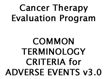
To ensure consistency among sites or even within a single site, the criteria and grading scales are specified in the DSMP. Formal criteria for grading symptoms or conditions, such as the World Health Organization Toxicity Criteria and the Cancer Therapy Evaluation Program Common Toxicity Criteria exist, but in some studies the PI or sponsor devise grading scales unique to that study.
Each DSMP must include the plan for reporting Aes and SAEs in conformity
with the local IRB  policies
(see the algorithm in the February
2005 Clinical Research Times article ), federal regulations, and sponsor
guidelines [HHS (45
CFR 46.103), FDA (drugs biologics: 21 CFR 312,
314.80;
600.80;
devices: 21
CFR 812.150; unanticipated problems: 21
CFR 56.108), ICH
GCP (3.38, 4.11, 5.17)]. Since reporting requirements often differ,
the PI must consider when writing the DSMP that Aes and SAEs may need
to be reported to the sponsor and the IRB within a different timeframe.
policies
(see the algorithm in the February
2005 Clinical Research Times article ), federal regulations, and sponsor
guidelines [HHS (45
CFR 46.103), FDA (drugs biologics: 21 CFR 312,
314.80;
600.80;
devices: 21
CFR 812.150; unanticipated problems: 21
CFR 56.108), ICH
GCP (3.38, 4.11, 5.17)]. Since reporting requirements often differ,
the PI must consider when writing the DSMP that Aes and SAEs may need
to be reported to the sponsor and the IRB within a different timeframe.
While designing a DSMP is complicated, this prospective planning will help protect participants' safety and safeguard the validity of the data and the success of the study. Investigators who conduct research in the General Clinical Research Center (GCRC) are required to use a GCRC DSMP template , while other investigators must devise an adequate DSMP on their own. All DSMP information must be included in your INSPIR application in Section H, with any supporting documents in Section S.
Quiz
This Quiz applies to the recertification period from July 1, 2007 to June 30, 2009. CME credits are also available.
Click
here and close window if you are a BUMC researcher
and would like to take the quiz now.